Loa is a queercrip writer, organizer, and oral historian based in New York City. They have severe ME/CFS that leaves them unable to work and unable to do many life tasks on their own. Friends of Loa helps Loa with their life needs like grocery shopping, preparing food, going to medical appointments, navigating complex bureaucracy, and fundraising.
We would love for you to join us! Check out our fundraiser, or if you’re local to NYC, consider joining us in person!
Who is Loa?
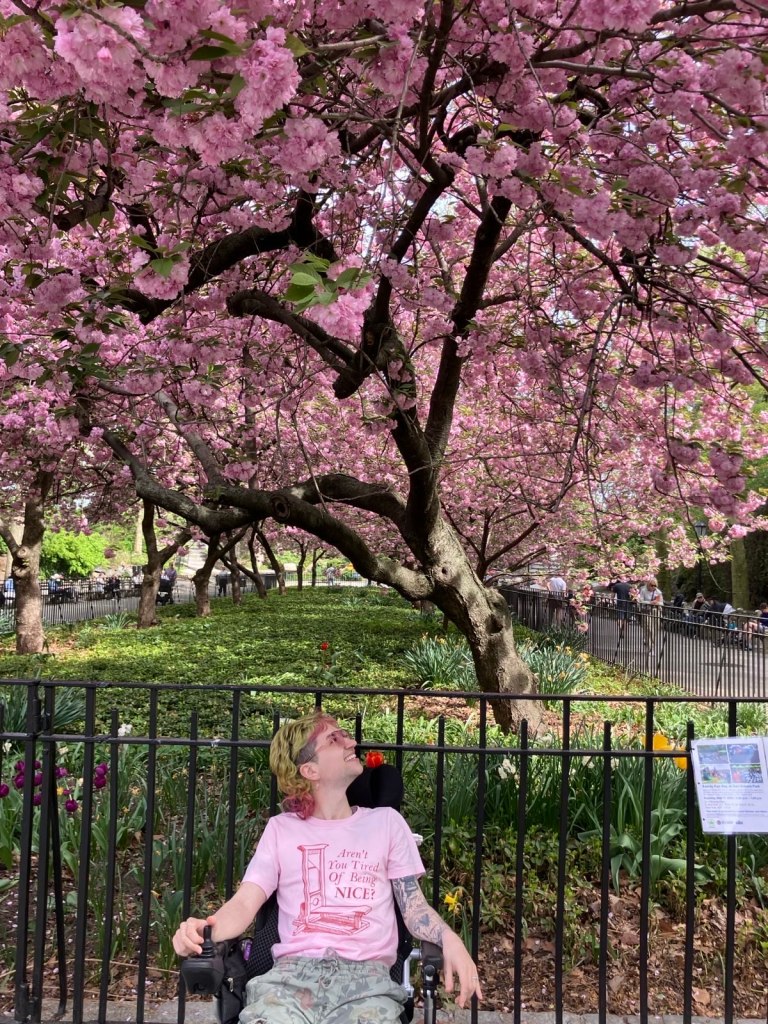
Loa is a proud Gemini, lover of queer horror, and a dedicated enthusiast of letter writing. Their favourite TV show is Black Sails and their favourite book is Confessions of the Fox.
Loa’s illnesses are severe, and as a result they spend most of their time in bed. Though they’ve found some successful treatments, they are unlikely to fully recover.
While their health problems are difficult, the greatest hardship in Loa’s life comes from trying to piece together support from a fractured social safety net. Loa lives entirely on community and social support. Supporting our fundraiser helps fill in the gaps left by social programs and ensures Loa has the resources needed to thrive.
Despite the difficulty, Loa believes a better world is possible
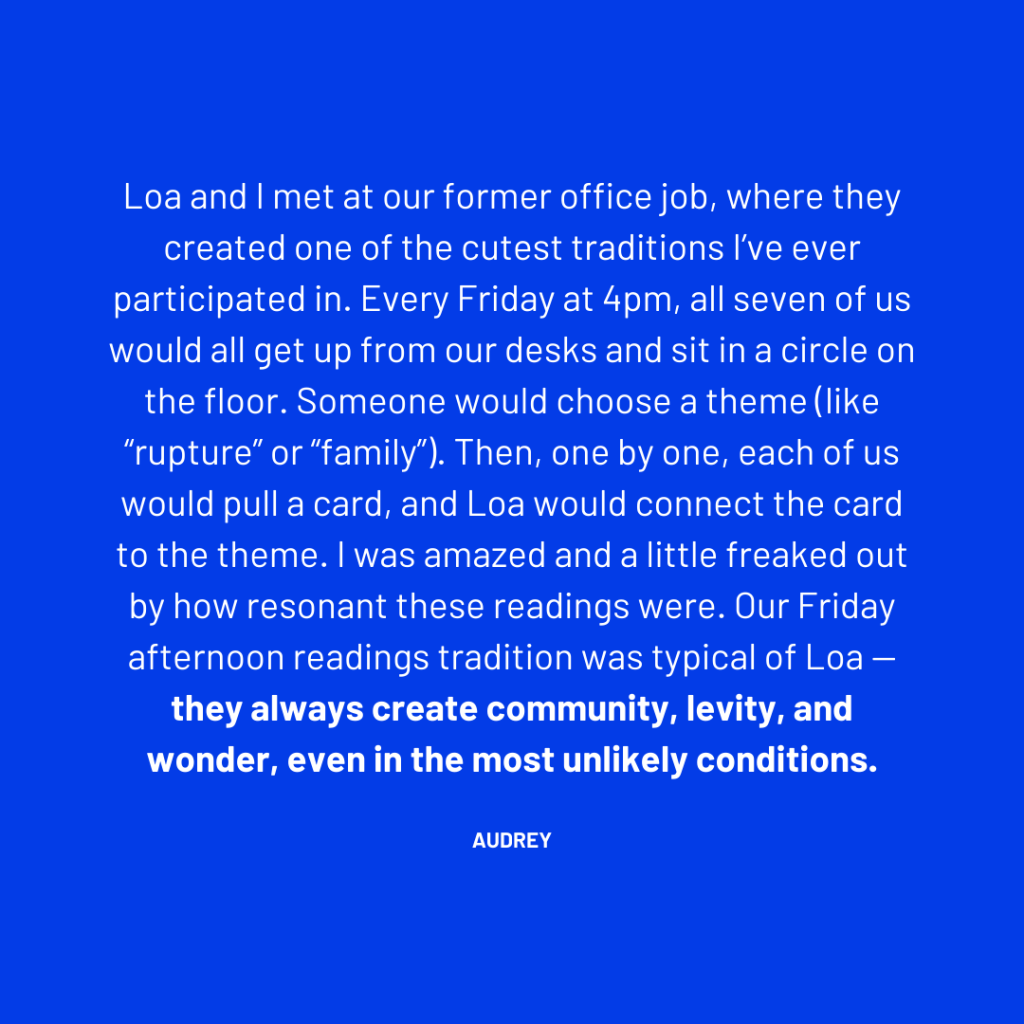
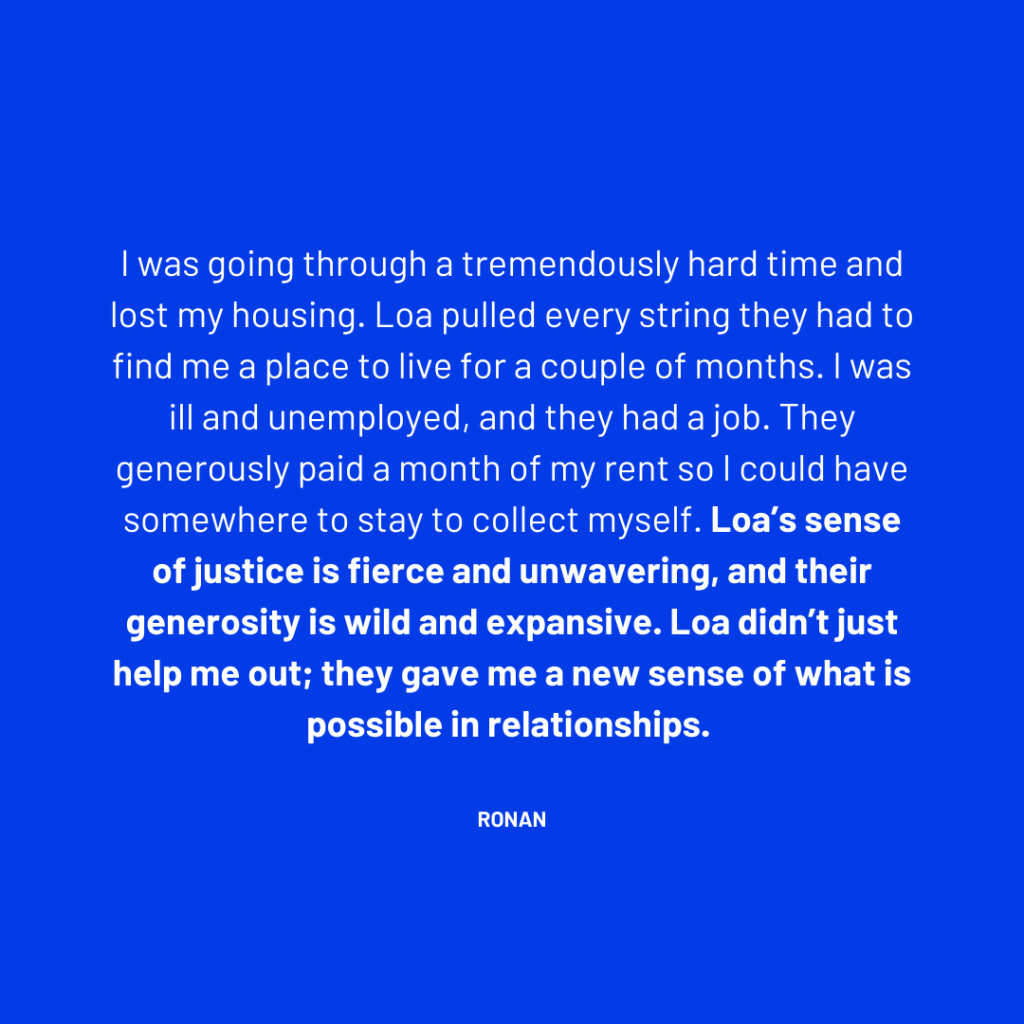
Here’s what members of Friends of Loa say about Loa:

WHAT IS COLLECTIVE CARE?
Every human being needs and deserves care. In our society, most care is given and recieved in the context of family–people care for their children or grandparents, or for their partners. If someone gets sick, family steps in to offer support. But this can create burnout in families, especially when there are lots of competing care needs.
Collective care is a framework for giving and receving care outside of the traditional family. Rather than one or two people being responsible for someone’s care, collective care involves lots of people pitching in to help meet someone’s care needs.
People do collective care all the time. Watching the neighbour’s kids is collective care. Bringing soup to a sick friend is collective care. There are many histories and practices of collective care. We build on these practices to create a more structured form of collective care that seeks to create a long term, sustainable network of many people helping Loa live and thrive.
WHY THIS MATTERS NOW
We believe that people should look after each other. When the government fails to support disabled people, collective care allows communities to ensure that they are not abandoned. As we work together to support Loa, we’re not only caring for their welfare; we’re demonstrating how communities can create real solutions. In a time of rising fascism and the destruction of the social safety net, collective care defies worldviews that dehumanize and marginalize disabled people.
 Friends of Loa